
A customer finds your business in a directory, calls the number and reaches someone else. Another follows an old address to premises you left last year. These are practical reasons to care about local citations, even before considering search rankings.
Accurate business information helps people find and contact you wherever they discover your name. The work is part of local SEO for small businesses, alongside your website, Google Business Profile and reputation.
This guide explains what a local citation is, which sources deserve attention and how to audit your listings without turning the job into endless directory submissions.
What is a local citation?
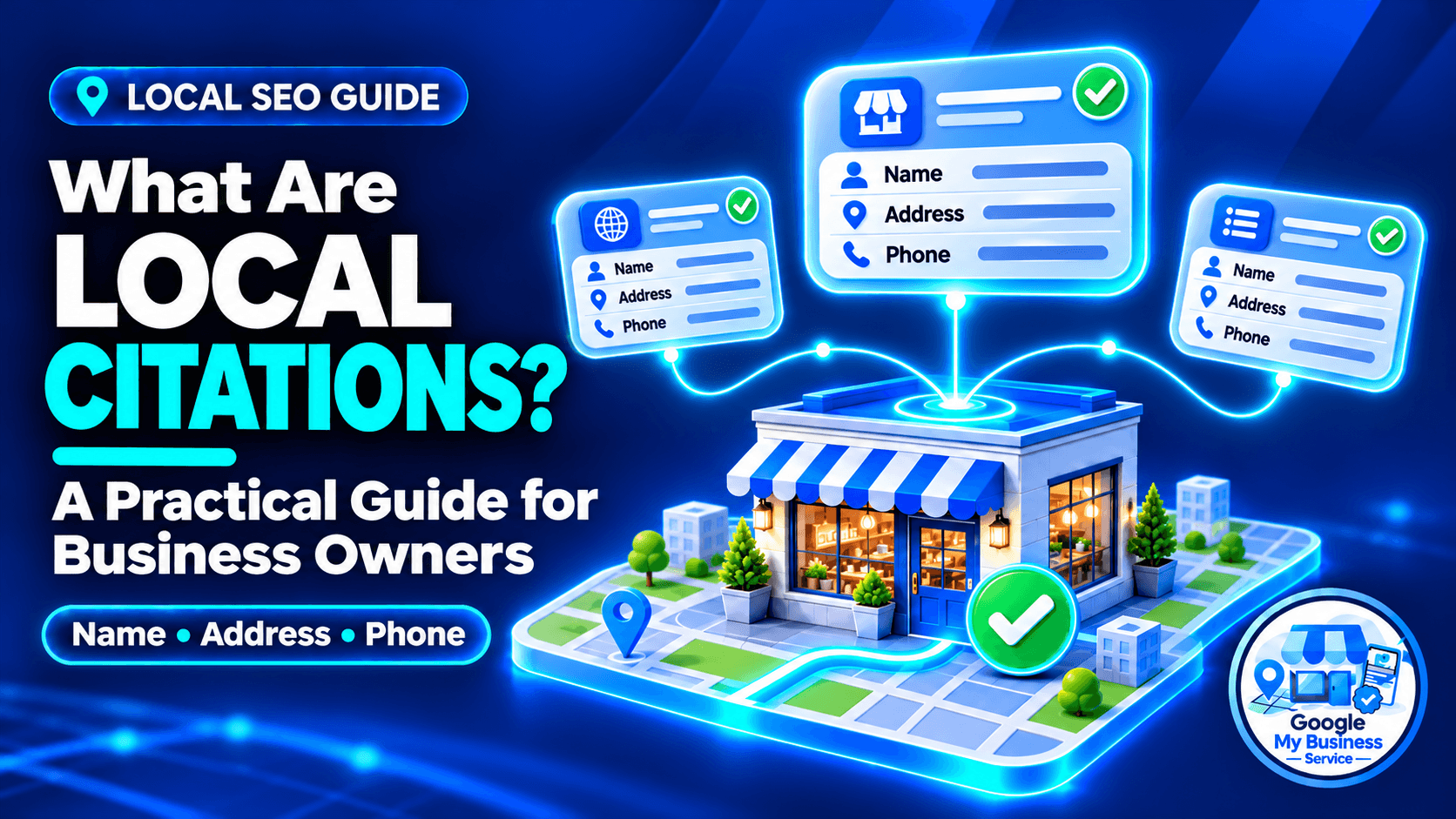
A local citation is any online mention of a business’s Name, Address, and Phone Number (NAP). It can appear in a directory, map listing, social profile or local article. A useful citation helps someone identify the correct business and understand where or how to contact it.
That familiar definition appears in Moz’s local citation guide. In practice, mentions can include only some business details. A local newspaper might publish a business name and neighbourhood without its full address or phone number.
For a fictional example, a directory entry for “Cedar Bicycle Repair” containing its shop address and working phone number is a local citation. A community article identifying that shop by name and location is an unstructured example.
Neither listing proves that the business is licensed, currently open or suitable for every customer. The information still needs to be accurate and maintained.
What information should a local citation include?
Start with the details customers need to recognize and contact the business: its real name, appropriate location information and working phone number. Add the correct website and useful supporting details where the platform allows them. Keep a master record so updates use confirmed facts, while respecting each platform’s fields and address-privacy settings.
| Detail | What to check |
|---|---|
| Business name | The recognized real-world name, without extra SEO keywords |
| Address or service coverage | The genuine location or appropriate public coverage information |
| Phone | A working number reaching the correct business or branch |
| Website | A relevant, functioning page representing that business/location |
| Hours | Current operating hours and applicable exceptions |
| Category and description | An accurate explanation of the actual business |
| Photos and logo | Authentic, current material where useful and supported |
You may see NAPW, which adds “website” to NAP. It is a useful reminder to check the destination URL rather than stopping after the contact details.
For a business with several branches, keep a separate record for each genuine location. A listing for one branch should not accidentally send customers to another branch’s phone or page.
What are structured and unstructured citations?
Structured citations place business details into defined listing fields. Unstructured citations mention the business within ordinary content, such as an article or event page. Both can help someone discover your business. The difference is how the information is presented, rather than whether the mention contains a backlink or uses a particular website technology.
| Type | Example | Practical action |
|---|---|---|
| Structured | An eligible Google Business Profile, map listing, directory record or business social profile | Claim the correct record where possible; check its fields |
| Unstructured | A local news feature, association article or genuine event mention containing identifying business details | Check accuracy; request a correction from the publisher if necessary |
Not every reference to a brand is a complete NAP citation. A passing name-only mention provides less identifying information than a profile containing contact and location details.
Earn contextual mentions through real activity: contribute useful expertise, participate in a relevant community event or maintain a genuine association membership. Posting repetitive promotional comments on forums is not a sound citation strategy.
Why do local citations matter for your business?
Local citations create additional places where customers can discover and contact you. Accurate information can also help search systems understand which business a reference describes. Their value depends on the source and the details published: a relevant listing with the right phone number can serve customers, while an outdated record can send them elsewhere.
Google explains that its business information comes from several sources, including public web content, licensed third-party data and contributions from owners and users. Your own profile is therefore part of a wider information environment. See how Google sources business information.
That does not mean each new directory entry produces a ranking increase. Google’s local-ranking guidance describes relevance, distance and prominence. It does not provide a required citation count or a fixed percentage ranking benefit for citation building.
Keep citations within the wider picture of Google Maps SEO. They do not remove distance, replace useful website content or guarantee a place in the local pack.
How are local citations different from backlinks and AI citations?
A local citation identifies a business through its details. A backlink is a clickable link to a website. An AI citation attributes information in an AI-generated answer to a source. These can overlap, but they describe different things, so a business mention should not automatically be reported as either a backlink or an AI recommendation.
For example:
- A directory entry can contain your NAP details without linking to your website.
- A local article can mention your shop and link to it, creating both a citation and a backlink.
- An AI answer might cite your educational article without mentioning your business location or recommending your service.
Accurate third-party information may help when an AI system retrieves those sources. It is not evidence that every assistant checks the same directories or requires a particular number of listings.
Google’s generative-AI search guidance emphasizes useful content and established SEO practices. There is no wording template that guarantees your page will replace an existing AI Overview source.
Which local citation sites should you prioritize?
Prioritize platforms that fit your country, business type and customers. Start with important existing records, then consider relevant maps, review sites, industry directories and local organizations. A useful source should have a clear reason to list your business and a workable way to maintain its information. A long directory list alone is not a strategy.
| Source group | Examples to assess | Selection question |
|---|---|---|
| Maps and local discovery | Google Maps, Apple Maps, Bing’s local-business surfaces | Is the platform supported and is this business eligible? |
| Review and social platforms | Relevant Yelp, Facebook or other business profiles | Do your customers actually use it in this market? |
| Industry directories | Tourism, professional, trade or specialist directories | Does the directory accurately match your business? |
| Local organizations | Chamber of commerce or genuine association membership | Is the relationship real and useful? |
| Editorial/community sources | Local publications, event organizers and useful business features | Is there a legitimate reason to feature the business? |
These are examples to investigate, not instructions for every business to join every platform. Coverage, eligibility and features vary.
Before submitting, search the platform for an existing record. If one represents your business already, work on that record rather than immediately adding another.
Avoid a directory whose main appeal is a promised ranking boost. Check relevance, public listing quality, correction options and any payment terms before investing time or money.
How do you audit and build local citations step by step?
Create a confirmed business-information record, find existing listings and fix the errors most likely to mislead customers. Then add worthwhile missing listings and verify the public result. Keep a short action log throughout. This makes citation building a manageable maintenance process, with evidence of completed work instead of a growing list of unverified submissions.
1. Prepare one master record
Record the preferred business name, public contact information, website, operating hours and relevant categories. For several locations, include a branch identifier and the correct location page.
Keep non-public address information separate from details intended for publication. Store account access securely; the business should control the email address used to manage important listings.
2. Find existing and outdated records
Search for the business name with its town, current phone number, previous phone number and old address where applicable. Review the platforms customers use most. Save the exact listing URL rather than only the directory homepage.
A discovery tool can help. Whitespark’s Local Citation Finder, for example, compares business mentions and competitor opportunities. Discovery is different from editing or distributing records; check the actual feature before paying for a tool.
3. Fix material errors before formatting details
Use customer impact to choose the repair order:
| Priority | Finding | Next action |
|---|---|---|
| Urgent | Disconnected phone, wrong premises or broken website | Correct the record and test the contact route |
| High | Two records appear to represent the same business/location | Confirm their identities; follow the platform’s duplicate process |
| High | Customers see obsolete hours or a misleading business identity | Update the facts and inspect the public listing |
| Lower | Ordinary punctuation, spacing or accepted address abbreviations | Standardize when convenient after substantive issues are fixed |
For example, “Street” and “St.” do not automatically indicate different premises. Whitespark’s NAP variations guidance explains that ordinary abbreviations and formatting can be normalized. A different building number or obsolete phone number deserves much more attention.
4. Add selected missing listings
Choose sources that pass your relevance checks. Use accurate information and complete useful fields. Manual submission may suit a small portfolio; software or a provider may help when many records need maintenance.
If using a distribution service, check its country coverage, supported publishers, correction process and what happens when the service ends. Do not assume a tool reaches every directory or that a feed update appears everywhere immediately.
5. Check the live result
Submission confirmation is not the same as a published listing. A published listing is not proof that a search engine has indexed it, and indexation is not proof of a ranking benefit.
Open the public URL. Check the details, test the website link and confirm that the phone reaches the intended business. Record a completion date or the reason the item remains pending.
A worked citation-audit example
The following is fictional, not a client case study or a claim about measured results.
| Record | Finding | Action | Completion check |
|---|---|---|---|
| Main map listing | Correct name and address; old telephone | Update the telephone | Public number reaches the shop |
| Local directory | Address from before the move | Request a correction to the existing record | Public location matches the current premises |
| Trade directory | Two profiles for the same branch | Confirm records, then request the platform’s appropriate resolution | Correct record remains; duplicate request status recorded |
| Community article | Correct name and location; no link | No urgent correction needed | Business identity is accurate |
| New directory | Submission accepted, page not yet published | Mark pending | A working public listing URL becomes available |
What if you are a service-area or home-based business?
A business that travels to customers should not publish a private home address simply to complete a citation checklist. Start with its actual operating model and each platform’s address-display rules. Use suitable service coverage and contact details where supported. If a directory requires public information you should keep private, choose a more appropriate source.
Google’s business-representation guidelines say service-area businesses should hide an address where customers are not served. That does not mean inventing a storefront address or using a mailbox to appear in another city.
Check website templates and directory previews for unintended address exposure. Consistency should represent the same real business while respecting valid differences in public address display.
For a more detailed explanation of storefront, hybrid and travelling-business models, read our service-area business address guide.
How should you handle a move, rebrand or duplicate listing?
Start by deciding whether the record describes the same continuing business, a different branch or a genuinely separate entity. Update the existing record when that is appropriate, following the platform’s process. A move, rebrand and duplicate are different situations; creating another listing immediately can leave outdated information in circulation and make the cleanup harder.
For a move, list the old address and current address in your private change log. Update your website and important profiles, then work through relevant secondary listings. Search for the old details again after corrections have had time to appear.
For a rebrand, document the genuine new identity and follow any platform verification requirements. For a possible duplicate, compare the business, location and record history before requesting a merge, correction or removal. A separate legitimate branch should not be removed as a duplicate.
If incorrect details keep returning, investigate whether another source or active data feed still carries them. Keep support references and dates so the next follow-up starts with evidence.
How do you measure whether citation work is useful?
Measure information accuracy and customer outcomes separately. Record which important listings are correct, which repairs remain pending and whether visitors from relevant sources become genuine enquiries. Search visibility can provide additional context, but a ranking change alone does not establish that citation work caused it. Track other meaningful business and website changes alongside the work.
| Measure | What it tells you | Limitation |
|---|---|---|
| Important listings checked and accurate | Maintenance progress | Not a ranking score |
| Live corrected records | Public changes completed | Not proof of search indexation |
| Referral visits from a directory | Recorded website traffic from that source | Not every visit or customer interaction |
| Confirmed forms or bookings | Completed tracked actions | Still requires lead-quality checks |
| Qualified leads or customers | Business value | Attribution may be incomplete |
Use consistent incoming-link tags where you control the URL and the platform supports them. For example, a clearly labeled directory campaign can help distinguish recorded visits from different sources. Do not add campaign tags to ordinary internal links.
Our guide to tracking GBP website traffic and leads in GA4 explains the difference between clicks, website sessions and successful enquiries. Apply that distinction when reviewing directory traffic too.
What should your first month of citation work look like?
Use the first month to establish accurate business records and a repeatable process, rather than chase a citation total. Start with discovery, repair the most important errors, add selected relevant sources and review what actually went live. The schedule below is a practical working plan, not a search-engine requirement or a promise about ranking speed.
| Period | Main task | Deliverable |
|---|---|---|
| Week 1 | Confirm business details and discover important existing records | Master record and prioritized audit |
| Week 2 | Fix wrong contact details, obsolete locations and important duplicates | Tested public corrections and pending-request log |
| Week 3 | Add selected relevant missing listings | Submission records and live URLs where available |
| Week 4 | Recheck public details and review available enquiries | Short status report and next actions |
Afterward, review important records when business details change. A quarterly check can be a manageable routine for a stable small business; it is a planning suggestion, not a Google rule. A move or phone-number change needs attention when it happens.
Frequently asked questions
There is no universal citation target. Start with important platforms your customers use and relevant local or industry sources. Competitor listings can reveal opportunities, but copying their total does not establish quality. Stop expanding when the remaining sources offer little customer value or create information you cannot realistically maintain.
Many platforms offer a basic business listing without charge, while some directories, memberships and management services involve fees. You can handle suitable submissions yourself, although the work takes time. Paying for a service buys agreed work or distribution; it does not buy an organic ranking position or guarantee leads.
No. A citation can identify your business without a clickable website link. A relevant link may also help customers visit your site, so add the correct destination when supported. Do not dismiss an accurate local mention solely because it lacks a link, or assume every directory link improves rankings.
Timing depends on the publisher, account access, review process and any data feeds involved. Some corrections appear quickly; others require follow-up. Separate the date a public record changes from any later change in traffic or leads. There is no reliable universal timetable for a ranking improvement from citation cleanup.
Consider outside help when the workload exceeds what your team can maintain. Ask which sources will be used, how existing records are checked, who controls accounts and how live results are reported. Confirm correction and renewal terms. A large submission count is less useful than relevant, accurate listings you can manage.
Start with the details customers rely on
Choose your most important existing listing today. Check the name, appropriate location information, phone number and website. Correct any material error, verify the public result and record the next review. That gives citation work a clear purpose: helping people find and reach the right business.
If you need a genuinely new profile, our new Google Business Profile setup starts with business assessment. If you own an active profile that needs improvement, review our Google Business Profile optimization.
Compare the current scope and pricing at Google My Business Service. Profile setup, profile optimization and directory citation management are different tasks; choose the support that matches the work you actually need.